
Publicació
Repair has been addressed in the growing body of literature in the social sciences either as a restoration of social order or as a form of care for fragile things. Drawing from ethnographic work on a telecare service for older people in Spain between 2007 and 2011, I address here repair from the ‘flesh and bones’ side of it. In particular, I focus on the work undertaken by service workers, users and contacts alike that helps to maintain an infrastructure of usership: not a restorative form of medical rehabilitation, but a constant restoration of a web of embodied, legal and technical practices so that someone could be considered a user of a service. That is, an infrastructure creating and ensuring the conditions for (tele)care to happen or take place in compliance with contractual terms. Rather than as a form of ‘re-instauration’ (going back to square one, revitalising and polishing in practice the terms of the contract), I call their form of repair ‘underpinning’. It entails going with the flow, and acting thereon. Underpinning could be described as a form of repair that addresses habits as things going beyond the skin, in and through different mediators that connect uneven events and places. To underpin, hence, is to ensure on the go a certain topology of habit: a habitality.
Referència
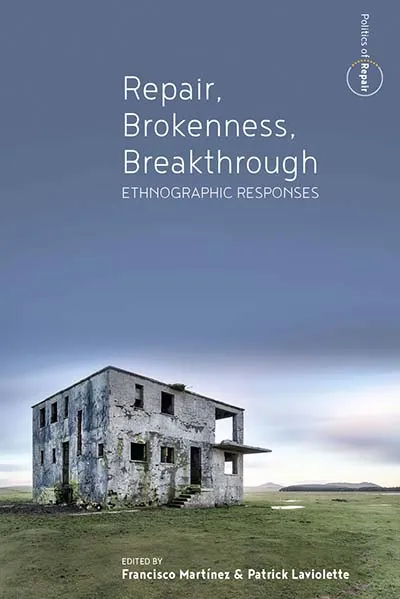
Criado, T.S. (2019) “The Lady is Not There”: Repairing Tita Meme as a Telecare User. In F. Martínez & P. Laviolette (Eds.) Repair, Breakages, Breakthroughs: Ethnographic Responses (pp. 67–72). Oxford: Berghahn
No hi ha altres autors associats a aquesta publicació.