
 |
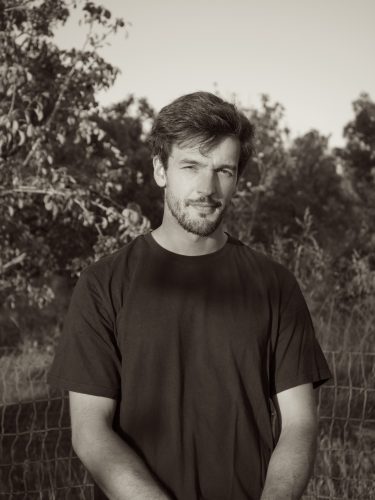
Alejandro LimpoPhD Reseacher University of Southampton Email: A.Limpo-Gonzalez@soton.ac.uk Beginning of the stay: 15/01/2026 End of the stay: 15/07/2026 |
Lorenzo Carta investigates digital innovations, particularly Artificial Intelligence, in their multifaceted dimensions: from expectations and imaginaries to the design and governance of specific technologies. These topics are investigated through Science and Technology Studies (STS) approaches, combining theoretical reflections with ethnographic methodologies to understand how AI systems are imagined and how could reconfigure pre-existing practices, such as elderly care.
His current research project, conducted as part of his PhD, Artificial Intelligence and Digital Welfare: Processes and Implications of an Ongoing Change explores how digital predictive technologies are designed, anticipated, and potentially integrated into welfare services. The project specifically focuses on predictive models and wearable devices for fall risk prediction in elderly care. Using a mix of methodologies (including in-depth interviews, participant mapping, and document analysis) the research combines insights from Actor-Network Theory, User Studies, and Socio-Gerontechnology.
His research stay with the CareNet group will be dedicated to further developing this project by linking the empirical analysis to key theoretical discussions within STS. During his visit he will also organize seminars on his research topics.
About him
Lorenzo Carta is a PhD student in Applied Data Science and Artificial Intelligence at the University of Trieste. He held both a Bachelor’s and Master’s Degree in Philosophy from the University of Pisa. He obtained a Postgraduate Degree in Science Communication from SISSA (Trieste). His research focuses on AI technologies through the lens of Science and Technology Studies (STS) and the governance of emerging technologies. He collaborates with SISSA Medialab and the Trieste Science+Fiction Festival on science communication initiatives.
Alejandro Limpo is interested in the visual and computational cultures through which contemporary institutions from science to security and governance observe, represent, and govern seawater. His research, which combines ethnographic and media theoretical approaches, focus on the role of ocean sensing and platform technologie, the visual regimes and political imaginaries they foster. This work, which is currently being developed as part of his doctoral project, Platform Seascapes: Ethnographic Encounters with Anthropocene Seas and Oceans, funded by the Leverhulme Trust at Winchester School of Art, University of Southampton (UK), foregrounds interdsiciplinary conversations as key to interrogate and reimagine the role of media infrastructures and planetary data practices in shaping environmental knowledge in teh Anthropocene. Drawing on science and technology studies (STS), environmental media theory, and visual anthropology, his work is developing an ethnographic understanding of marine imaging and remote sensing practices across different platform ecosystems, attending to how they configure seascapes that are equally political, technological and material. During his time visiting Carenet he co-organized a two day seminar on the topic of “Environmental dispositives” along Carenet members Tomas Sanchez Criado (UOC) and Pablo Alonso (UOC). This workshop provided a unique space to strengthen connections between STS and environmental media approaches while drawing connections and alliances with other disciplines such as design, visual arts and architecture.
About him
Alejandro Limpo holds a BA in Anthropology from the National University of Córdoba (Argentina, 2018) and an MA in Digital Visual Anthropology from ISCTE-IUL (Lisbon, 2020). He is currently a Leverhulme Trust Doctoral Researcher at the University of Southampton. As part of his academic collaborations, Alejandro has held research visits at the University of Pennsylvania (USA), FAMU in Prague (Czech Republic), and the CareNet group at the Open University of Catalonia (UOC, Spain). His work contributes to debates on environmental governance, media infrastructures, and computational aesthetics, while engaging with activist and critical perspectives on oceanic space. In 2024, he co-founded the Deep Currents Collective, an independent network of researchers intervening in the jurisprudence and politics of the seabed.