ENCASA explores, through historiographic, ethnographic, and prospective methods, the construction of ‘home’ in new adapted and assisted environments for older people, or what some authors have defined as “homely non-family environments in the community” (Peace & Holland, 2001). These Residential Innovations for Aging Like at Home (IRECs – Innovaciones Residenciales para Envejecer Como en Casa) are alternatives to traditional home care and institutional residences, designed so that older people can live as if they were at home that is, in a community, with the necessary supports and care, and with autonomy. IRECs respond to the current urban, environmental, and care crisis.
ENCASA fills a gap in the study of residential innovations for older people in Spain.
First, it will provide a definition of IRECs in Spain, based on their historical development and a comparison with the international context. This will allow for the identification of continuities and discontinuities, both historical and geographical, between state and international models, and an understanding of the different concepts of home and old age inscribed in their community, architectural, and care designs.
Second, ENCASA will contribute knowledge about the ways of ‘making home’ in IRECs, a defining aspect that is also fundamental for the deinstitutionalization of care. It will help to understand in what sense and how these innovations facilitate “aging at home or like at home,” for whom they work and for whom they do not, how this changes throughout the aging process, and what role is played by residents’ social conditionsparticularly inequality factors such as gender, class, and migratory statusas well as the design of their architectural, social, and care infrastructures. In addition to the intersectional and longitudinal perspectives, it addresses the construction of home as a more-than-human practice involving the architecture of buildings, objects, and other beings with whom we cohabit, such as animals (pets) and plants. Understanding how care is configured in these environments is one of the expected impacts, but not the only one. Unlike other studies, we also examine how community and old age are constructed in these environments, two aspects that are also key to making home in later life.
Finally, ENCASA will enable the rethinking of future assisted environments through a methodology grounded in the ethnography of design and the participatory and inclusive design of residential futures in a context of demographic change. We seek to problematize the futures of aging environments to experiment with designs that enable other ways of aging (well) at home with care.
ENCASA will provide accessible and rigorous information about these residential innovations so that citizens can make informed decisions about these new models. Lastly, it will influence deinstitutionalization policies, providing key data to strengthen IRECs and propose improvements to make them accessible and inclusive.
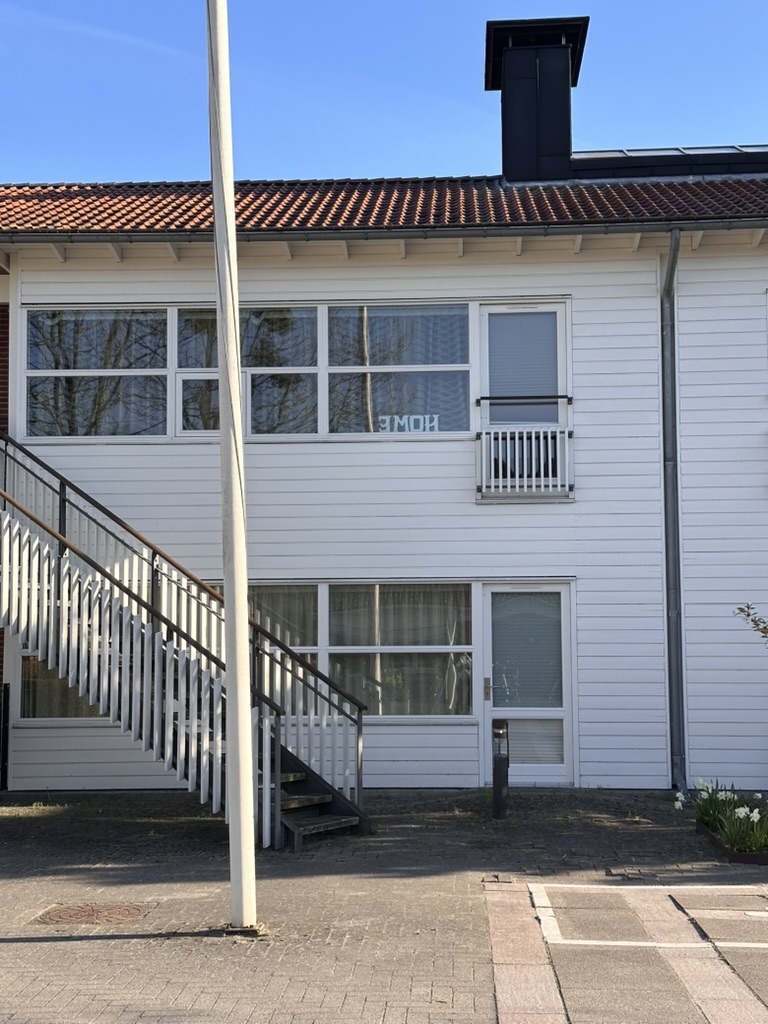
Photo: Signe L Yndgegein (used with permission)