
Estudios de Psicología | UOC-TRANSIC
Building O
Universitat Oberta de Catalunya
Rambla del Poblenou 156, 08018 Barcelona
More about Belén Jiménez-Alonso:
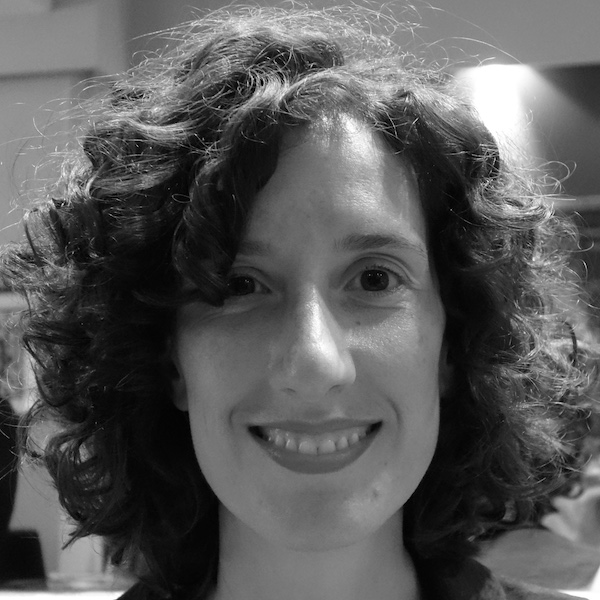
Belén Jiménez-Alonso
Assistant Professor
Presentation
BIO
Belén Jiménez-Alonso (PhD) is a psychologist whose work focuses on illness and end of life, and the ways technologies mediate human experience. She is currently an Associate Professor at Universitat Oberta de Catalunya (UOC). She is also an associate researcher at CERPOP (INSERM, Université de Toulouse, Chaire UNESCO). Previously, she was an associate lecturer at Université de Nice and a Marie Curie postdoctoral researcher at CERMES3 (CNRS, INSERM, EHESS, Université Paris Cité).
Her research lies at the intersection of cultural psychology, health, and memory studies, with a particular focus on how socio-cultural artefacts –such as language, images, and digital technologies– mediate experiences of illness, dying, and loss. Drawing on a background in the history and epistemology of psychology, her work approaches these experiences as historically and culturally situated, shaped not only by individual processes but by the systems of knowledge, representation, and practice through which they are understood and lived.
THEORETICAL FRAMEWORK
Her work is grounded in a social constructionist and cultural psychology perspective (Vygotsky, Bruner, Cole), which understands psychological processes not as internal, individual phenomena, but as relational, socially mediated, and culturally situated. From this perspective, experiences such as illness, end of life, and grief are shaped through narratives, practices, and material environments that enable or constrain meaning-making.
MAIN RESEARCH AXES
1) Adolescents and Young Adults (AYA), Cancer, and Digital Mediation
This line of research examines how adolescents and young adults with cancer use social media (e.g., TikTok, Instagram) to negotiate illness, identity, and temporality. In a life stage marked by identity construction and future orientation, cancer constitutes a biographical rupture that is increasingly mediated through digital environments.
Her work explores how digital platforms:
– enable new forms of expression and visibility of illness,
– mediate relationships with others (peers, caregivers, audiences),
– reshape experiences of time, uncertainty, and prognosis.
Keywords: AYA, cancer, social media, digital mediation, identity, temporality, illness narratives.
2) End of Life, Grief, and Emerging Technologies
This axis focuses on how technologies, particularly artificial intelligence, are transforming experiences of dying, mourning, and continuing bonds. Her research critically examines tools such as chatbots and so-called “deathbots” or “griefbots”, which simulate interaction with deceased individuals.
This work addresses:
– ethical implications of AI in end-of-life contexts,
– the reconfiguration of presence, absence, and memory,
– new forms of relationality between the living and the dead.
More broadly, she investigates how digital environments reshape grief practices and challenge traditional boundaries between life and death.
Keywords: end of life, grief, AI, chatbots, griefbots, continuing bonds, ethics, digital mourning.
3) Memory, Loss, and Mediated Remembrance (Visual and Digital Practices)
A third line of research examines how memory, both personal and collective, is constructed, mediated, and contested through cultural and technological practices. This includes not only individual experiences of loss, but also processes of historical memory, silencing, and the transmission of difficult pasts. Her work explores how different forms of mediation –such as photography, digital platforms, archives, and spatial interventions– shape what can be remembered, how it is remembered, and what remains invisible or unspoken.
Particular attention is given to:
– the role of visual methods (e.g., photography, collage, montage) in revealing layered temporalities and making absence visible,
– the ways digital technologies participate in the preservation, transformation, or distortion of memory (e.g., online archives, social media, algorithmic visibility),
– the relationship between landscape, infrastructure, and memory, especially in sites marked by violence or repression,
– the tensions between official narratives and silenced or marginalized memories, including gendered absences in historical accounts.
This line of work bridges personal grief and collective memory by examining how practices of remembrance, whether intimate or institutional, are always mediated, situated, and politically charged. It also considers how contemporary technologies reconfigure our relationship to the past, enabling new forms of access, circulation, and reactivation of memory, while simultaneously introducing new risks of erasure or simplification.
Keywords: memory, historical memory, digital memory, visual methods, photography, archives, mediation, landscape, absence, silencing.
Research interests
- Grief
- End of Life
- Digital tools
- Social networks
- Cancer / young cancer patients
- Mediation
- Cultural Psychology
Publications


Projects
ENCASA
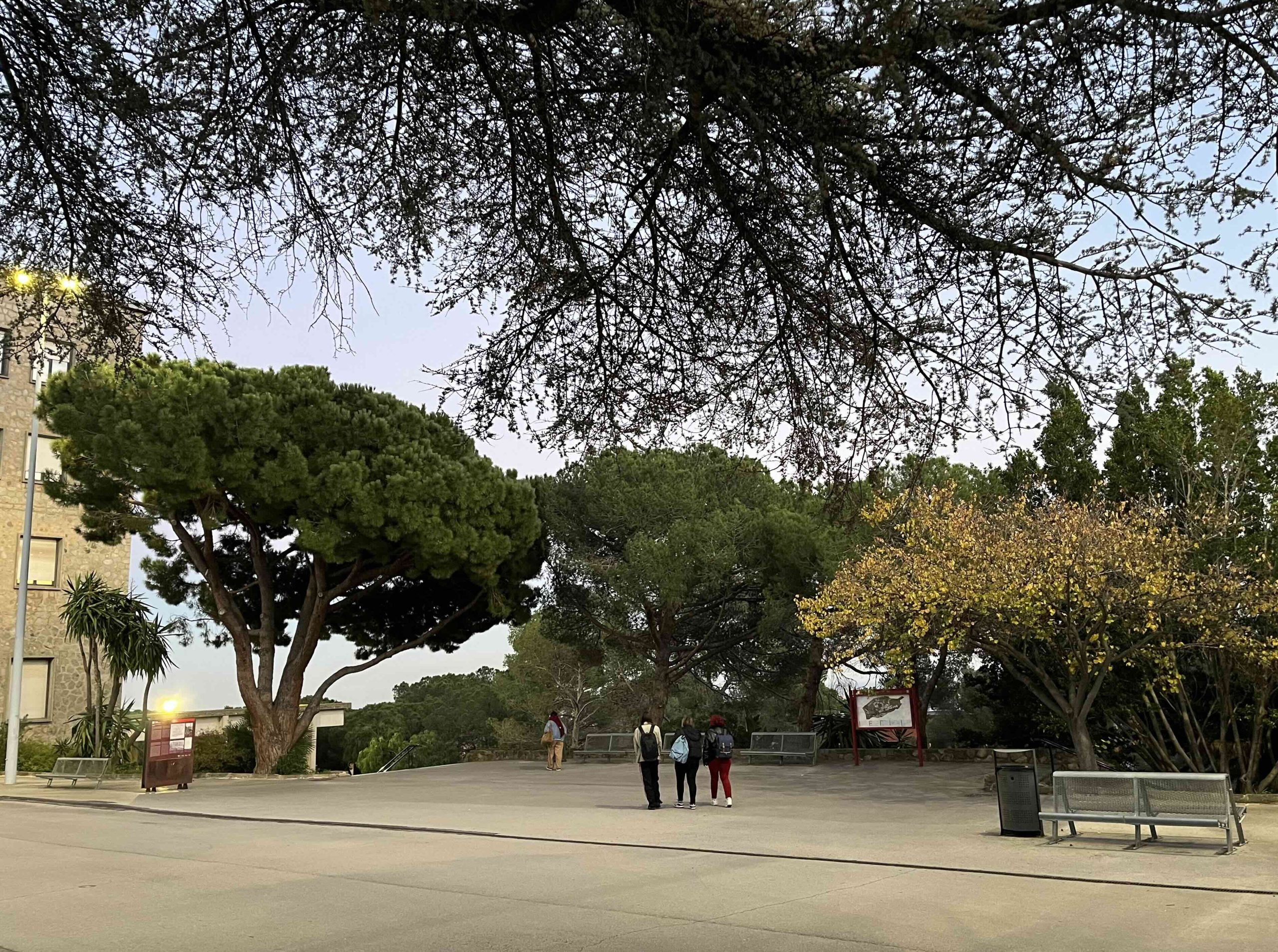
Women Absent from Collective Memory: The Mundet Campus Concentration Camp
News

Belén Jiménez-Alonso
Belén Jiménez-Alonso