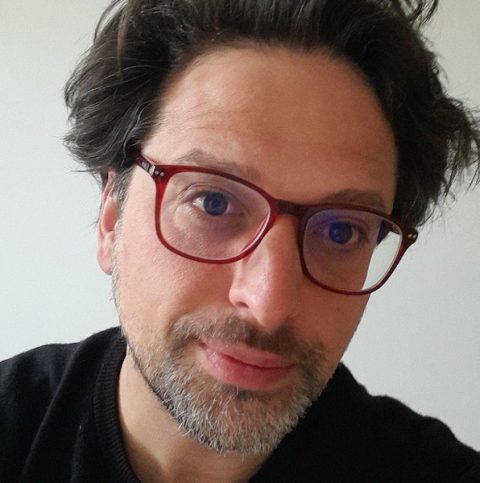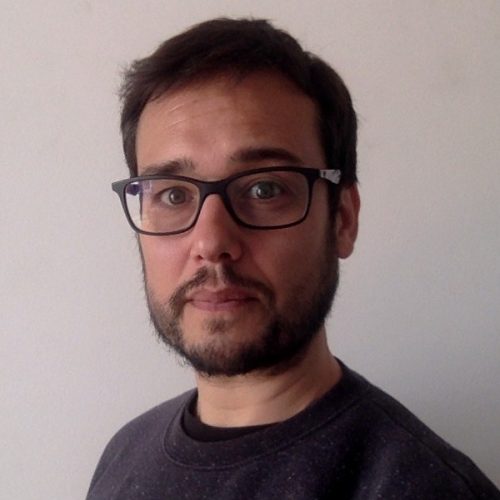
Next week, Tomás Criado, Irra-Rodríguez Giralt, and Alejandro Limpo will be participating on behalf of CareNet (UOC) in Territorio Experimenta V an initiative promoted by the Ministry of Culture’s Culture and Citizenship / Culture and Ruralities program. In addition to contributing a talk on the relationships between our studies on slow disasters, the role of social sciences in these contexts, and our interest in collaborative and speculative methodologies, we will be participating as experts in Axis 4: Culture, mediation, and the construction of futures, facilitated by Fran Quiroga (Concomitentes)
Here you could check all the information and the official program guide.
TERRITORIO EXPERIMENTA V: CULTURAL AND SOCIAL EXPERIMENTATION AND INNOVATION LABORATORY
The role of culture and the exercise of cultural rights in post-disaster contexts Los Llanos de Aridane, La Palma. Canary Islands. June 15–19, 2026
Presentation
Territorio Experimenta V is a project promoted by the Culture and Citizenship / Culture and Ruralities program of the Ministry of Culture. Its objective is to generate a space for experimentation and knowledge exchange to articulate initiatives, tools, frameworks, and workflows capable of projecting new narratives and cultural responses to the challenges of the social, ecological, and territorial future.
In this edition, the project explores culture’s capacity to activate, reinforce, and develop links between memory, roots, resilience, imagination, social innovation, and community reactivation, especially in emergency and post-disaster situations. Likewise, it focuses on initiatives aimed at guaranteeing the exercise of cultural rights in these contexts.
The focus is placed on territories affected by natural disasters and extreme weather events that have deeply transformed their human, natural, and cultural landscapes. These include the Lorca earthquake (2011), the La Palma volcanic eruption (2021), the Mediterranean DANAs (2024), the forest fires of 2021, 2022, and 2025, as well as extreme heatwaves and droughts.
Territorio Experimenta V in La Palma
Territorio Experimenta V takes place in Los Llanos de Aridane, La Palma, from June 15 to 19, 2026, with the collaboration of the Cabildo de La Palma and the support of the Ministry for the Ecological Transition and the Demographic Challenge. The gathering coincides with the II Conference on Good Practices in Intangible Cultural Heritage, organized by the Spanish Cultural Heritage Institute of the Ministry of Culture.
For the design of this edition’s program, we count on the support of an external advisory committee, composed of:
-
Olga Blasco, Full Professor of Applied Economics at the Universitat de València and scientific advisor to the Ministry of Culture.
-
Carmen Grau, researcher on natural disaster prevention and management at Waseda University (Japan) and member of the Valencian Observatory for Climate Resilience and DANA Management.
-
Marcia Jadue, researcher and management technician at the Observatori Cultural of the Universitat de València.
-
Rüdiger Ortiz, biologist, senior scientific evidence technician for the Congress of Deputies through the Science and Technology Office (Oficina C), and advisor to the Ministry for the Ecological Transition and the Demographic Challenge.
-
Elena Pérez, Full Professor at the Universidad Europea de Canarias and principal investigator of the project “Memory, landscape, and future after the volcano: heritage, tourism, and community in the Aridane Valley.”
-
Fran Quiroga, transdisciplinary researcher and director of Concomitentes, a program that promotes and mediates relations between artists and civil society.
-
Miguel Villalba, social and cultural anthropologist who, through research and audiovisual creation, has addressed the relations between identity, collective memory, and heritage in La Palma.
The laboratory will bring together 35 people from various sectors, disciplines, and contexts, who will work collaboratively to design new proposals, tools, and strategies aligned with the objectives and thematic axes of this edition. This workspace will foster the exchange of knowledge and experiences, as well as the formulation of interdisciplinary approaches to address the proposed challenges comprehensively.
Furthermore, Territorio Experimenta V will feature a public program including the presentation of projects and experiences linked to the role of culture in contexts of emergency and transformation, driven by different territories across the country. This program will allow the sharing of the laboratory’s workflow and the socialization of its results, promoting dialogue with citizens and expanding the scope and impact of the initiative.
Background and Institutional Framework
The project is part of the Culture and Ruralities program, which promotes cultural access, creation, and participation throughout the territory, with a special focus on rural environments as spaces for innovation and sustainable development.
Within this framework, Territorio Experimenta V emerges as an evolution of Rural Experimenta, an initiative launched in 2019 that has promoted cultural innovation laboratories in various regions. After four editions, the program has expanded and opened up its focus and methodology, consolidating itself as a platform to rethink the role of culture in social, ecological, and territorial transformation.
This initiative is also part of the Cultural Rights Plan, which recognizes culture as a common good and a fundamental right, promoting its effective exercise under conditions of equity, diversity, and participation. In this context, Territorio Experimenta V aligns with these principles by placing cultural rights at the center of innovation, intervention, and territorial reconstruction processes, particularly in crisis scenarios.
Methodological Approach
The laboratory is conceived as an epistemic community oriented toward recognizing and amplifying the collective capacities that emerge in crisis contexts. It seeks not only to activate mechanisms of resistance but also, and especially, to restore memory and imagine new forms of coexistence and care for communities, their environments, and their cultures, while guaranteeing their cultural rights.
Through collaborative methodologies and a dynamic based on collective intelligence, participants will explore culture’s potential to generate renewed narratives, open avenues for care and symbolic and material reparation of communities, landscapes, and heritage, as well as test responses that strengthen communal life in the face of accelerated and often traumatic scenarios of transformation.
The results of this collective work process will be compiled in a publication that will systematize the learnings, methodologies, tools, and proposals developed during the laboratory. This publication will be designed to facilitate the transfer of knowledge to other territories and contexts, as well as contribute to the design of more effective public policies, institutional strategies, and cultural practices in emergency and reconstruction situations. Likewise, it is conceived as an open resource to make experiences visible, generate shared reference frameworks, and strengthen collaboration networks among cultural agents, administrations, and communities, extending the laboratory’s impact beyond its face-to-face development.
Thematic Axes
This edition proposes a reflection on the role of culture and the guarantee of cultural rights in emergency and post-disaster contexts. As a novelty, the focus extends beyond the rural sphere to incorporate urban environments, recognizing that emergency situations increasingly affect both contexts.
From this perspective, the project proposes a space for reflection on the role of culture and community creativity as tools for adaptation, and how they help to understand, care for, and reimagine territories, as well as to build futures in which vulnerability can be transformed into an opportunity for gathering, learning, and shared transformation.
Within this framework, four thematic axes of work are established:
-
Axis 1. Culture as a structural dimension in emergency management and reconstruction This axis proposes to effectively integrate the cultural and heritage dimension into disaster risk management and reconstruction strategies, plans, and tools, taking as a reference the Sendai Framework for Disaster Risk Reduction (2015–2030) and applicable state and regional regulations (such as Article 19 of Law 5/2025 on Canary Islands Volcanoes). It aims to incorporate culture into all phases of comprehensive management—prevention, mitigation, response, recovery, and memory—moving beyond its limited consideration for subsequent symbolic reparation processes. It stems from the recognition that catastrophes affect not only infrastructure and ecosystems, but also cultural landscapes, imaginaries, memories, and community practices. Culture is thus positioned as a strategic axis to strengthen territorial resilience, emotional care, the reactivation of the social fabric, and the guarantee of rights, contributing to more sustainable and inclusive reconstruction processes linked to the affected communities.
-
Axis 2. Protection and activation of the cultural ecosystem This axis focuses on identifying and systematizing learnings derived from recent experiences, such as the advice and support network for the Valencian cultural sector following the DANA, through the analysis of processes, measures, and coordination mechanisms deployed in emergency contexts. Based on this, it seeks to define response and collaboration tools for institutions and sectors to articulate a roadmap for the activation of the cultural ecosystem. This includes financing mechanisms, governance models, sector support instruments, and cultural reactivation strategies. Likewise, it recognizes the key role of associative networks due to their capacity for coordination, resource mobilization, and mediation between civil society and public administrations. The axis also incorporates the development of information systems and indicators to facilitate the planning, evaluation, and sustainability of cultural policies, as well as the formulation of operational recommendations to improve preparedness, response, and recovery in the face of future crises.
-
Axis 3. Culture, mediation, and collective memory This axis addresses the role of culture in preserving and activating social and cultural memory in disaster contexts. It is oriented toward identifying and analyzing initiatives that help sustain these memories, extracting transferable learnings and strategies to strengthen community resilience. It recognizes the potential of mediation and artistic-cultural practices as tools for care, emotional support, and the collective processing of grief, fostering spaces for listening, recognition, and social reconstruction. Furthermore, it proposes the memory of the disaster as a key element to prevent forgetting and the loss of knowledge and experiences, promoting its integration into collective stories. This includes recovering biographies, family archives, and heritage, as well as incorporating intergenerational learnings that reinforce community bonds and territorial roots.
-
Axis 4. Culture, mediation, and construction of futures This axis is oriented toward cultural and symbolic reconstruction from a future perspective, through the identification and analysis of initiatives that drive new narratives and ways of inhabiting affected territories, leveraging transferable learnings and strategies. It promotes the development of cultural and artistic processes rooted in communities, based on participatory, inclusive, and non-extractivist methodologies that stem from active listening and adapt to the times and needs of the territory, helping to reinforce the social fabric and collective identity. Likewise, the axis fosters imagination, co-creation, and collective action as ways of generating situated knowledge, favoring the shared construction of new imaginaries. Recognizing culture as a key relational infrastructure in contexts of transformation, it seeks to apply these learnings to the challenges of climate change and the ecological transition, promoting more adaptive, sustainable, and future-oriented ways of living.
PROGRAM: PDF